What a dog deshedding tool actually does
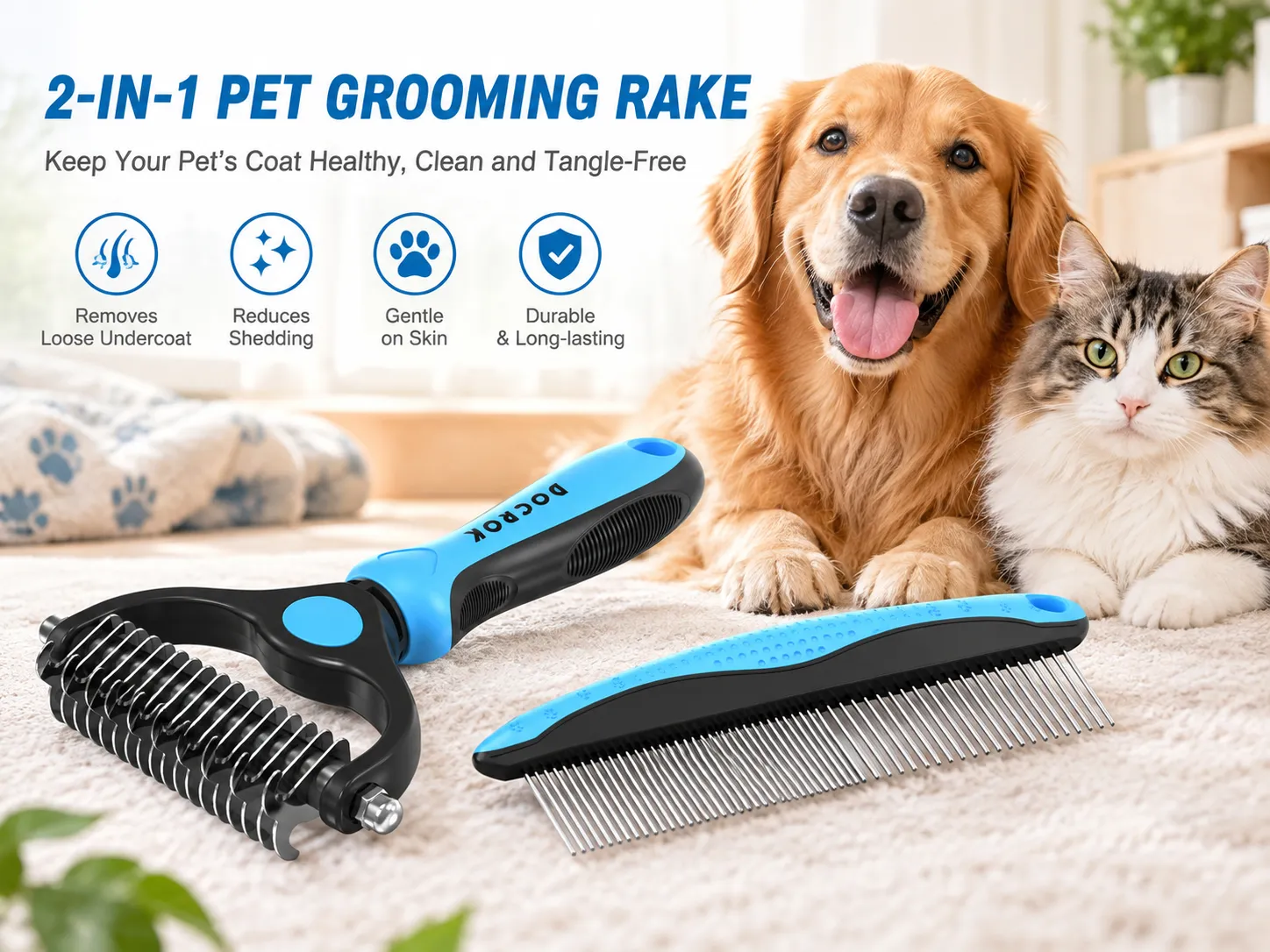
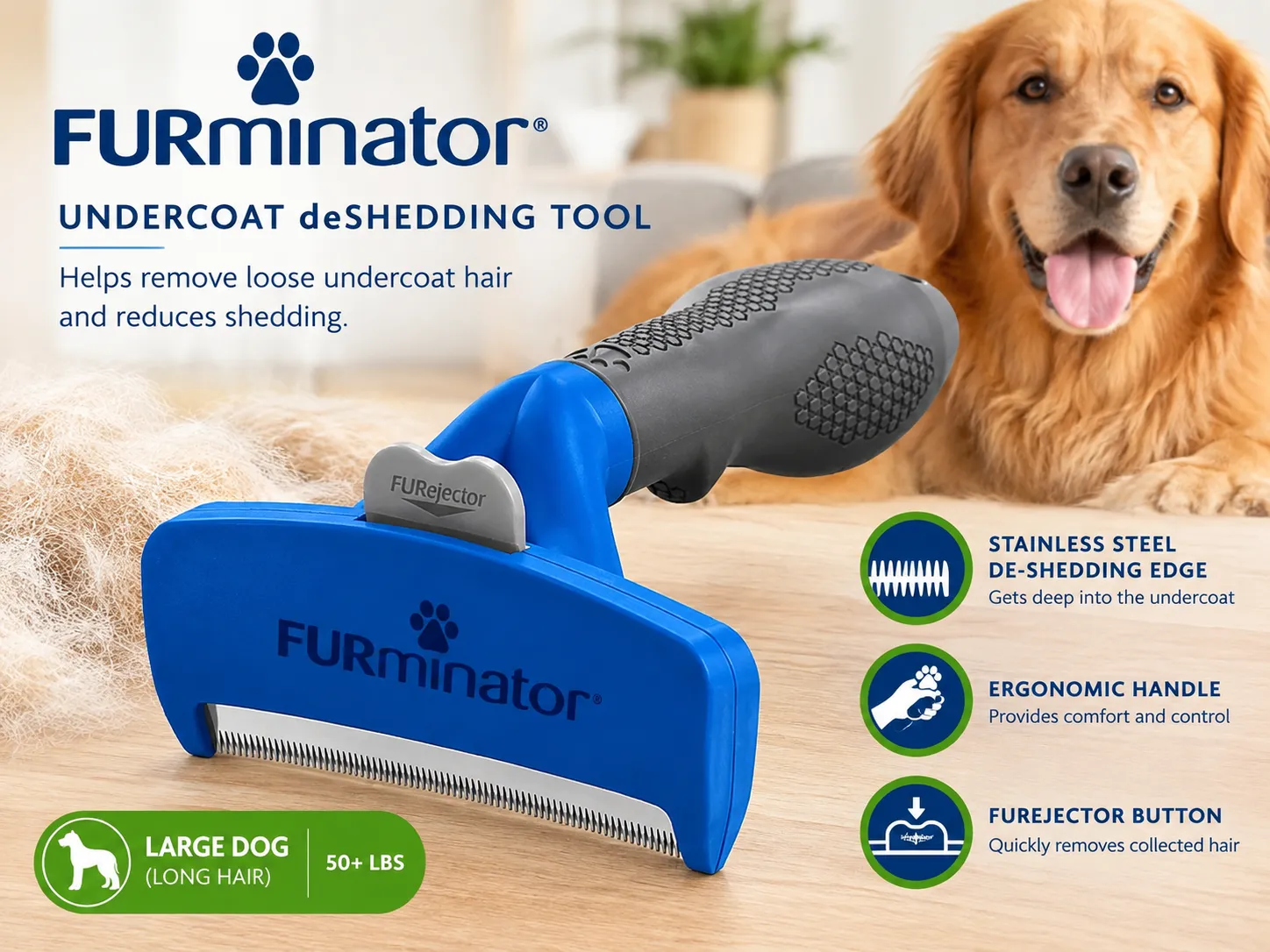
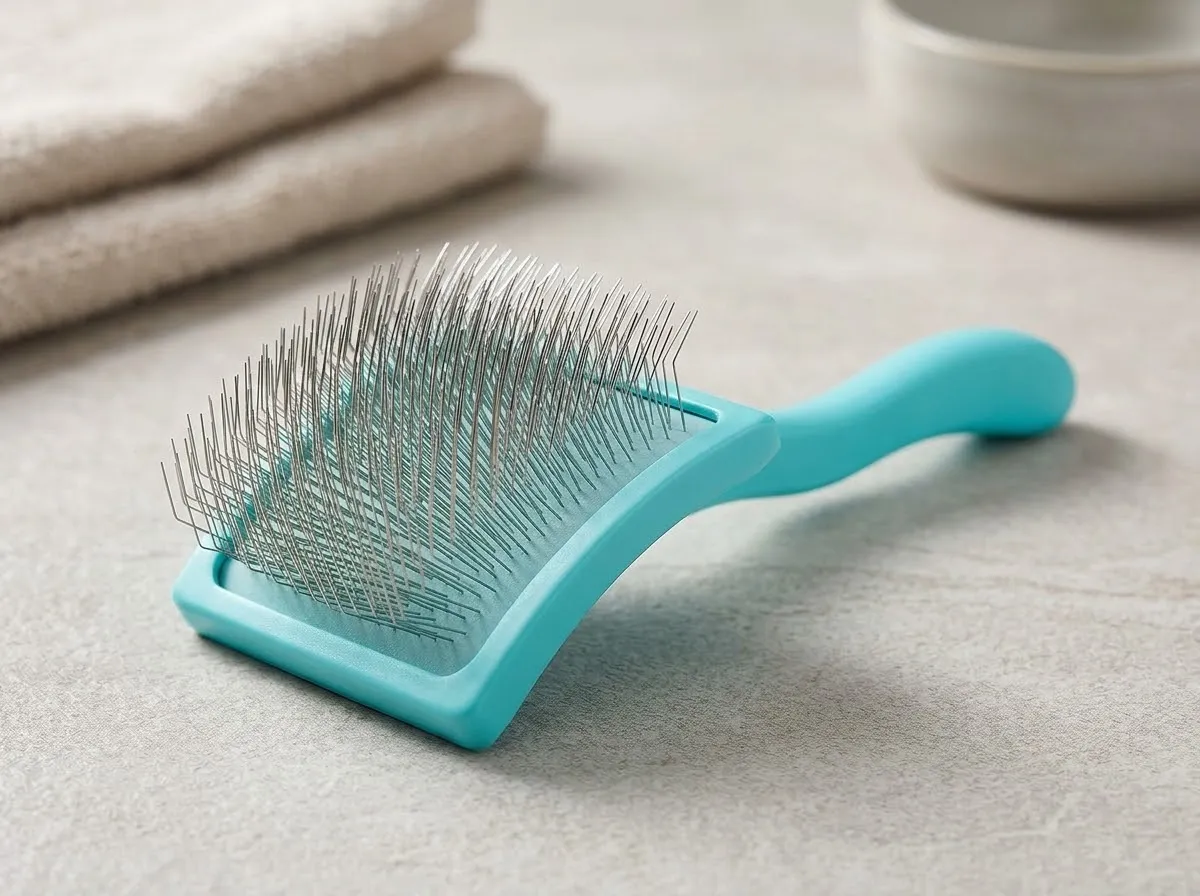
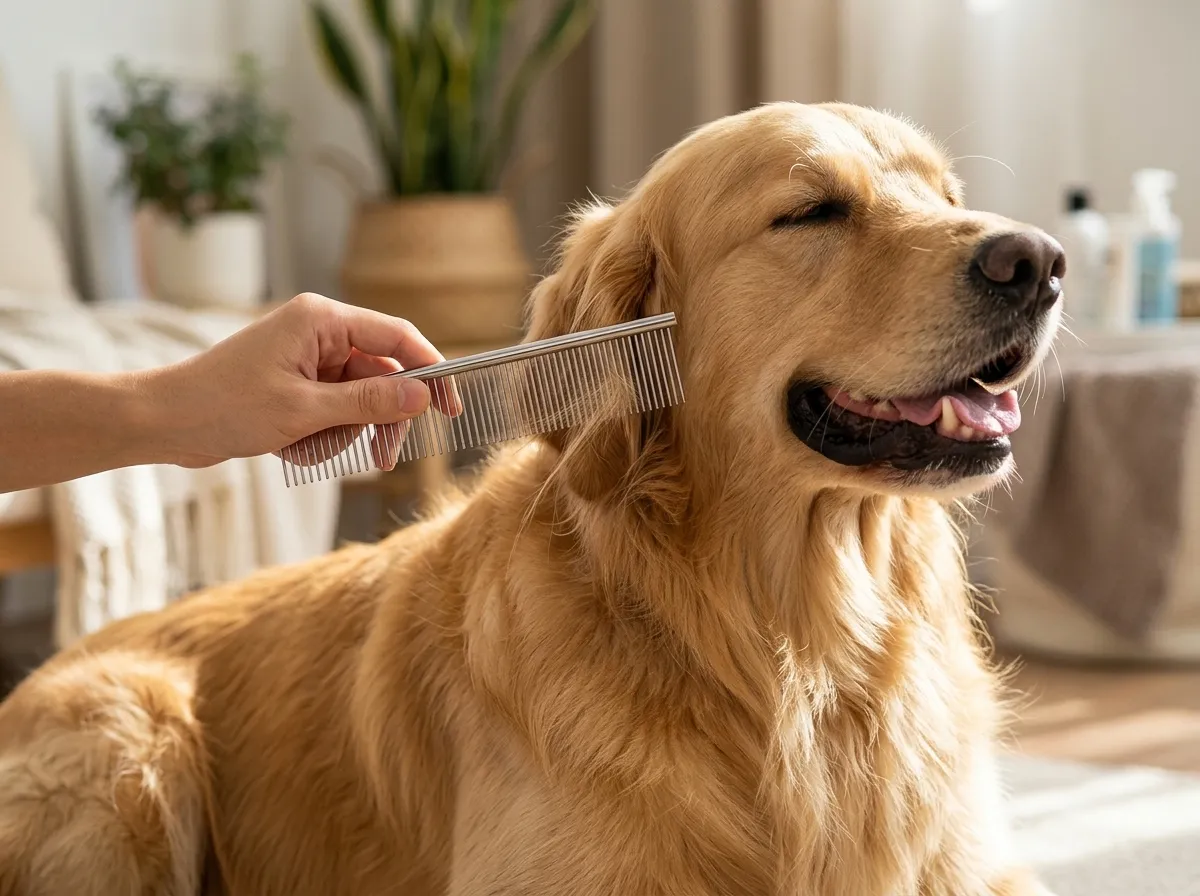
A deshedding tool lifts the hair that is already loose and ready to fall out. Some designs reach into the undercoat; others rake shed hair off the surface. A slicker, a pin brush, a glove, and a metal comb all do slightly different jobs: detangle, smooth, collect, or just check for knots. Most dogs end up needing more than one.
Pulling out more hair is not the goal. A tool that yanks healthy coat, scrapes skin, or makes the dog dread the whole thing is the wrong tool. Follow the maker's coat guidance, keep the pressure light, and stop if the skin goes red or the dog flinches. You want already-loose hair, not a forced thinning.
Double coat vs. single coat: start here
Double-coated dogs
A double coat has a longer outer coat over a soft, dense undercoat. The undercoat loosens heavily during seasonal changes, and that is when a rake or a coat-specific deshedding tool earns its keep. Teeth should be long enough to reach the coat but not so aggressive they scrape skin. Work in small sections, clear the hair often, and do not keep passing over the same spot.
Not every double-coated dog is the same. Density varies from dog to dog, and plenty of products are wrong for puppies, sensitive skin, or short coats. Part the hair and look at the skin as you go; a thick coat hides mats and irritation. If the tool catches, pause instead of pulling harder.
Single-coated dogs
Single-coated dogs do not have that dense undercoat. Many do fine with a rubber mitt, soft brush, bristle brush, or comb sized for their hair. A heavy undercoat rake often does little here and can irritate the skin. Pick a tool that glides smoothly and collects what comes off, rather than treating deshedding as one catch-all category.
Long, fine hair is its own case. It usually needs detangling before any deshedding tool goes near it. Check behind the ears, under the collar, around the legs, and near the tail. Never drag a deshedding edge through a knot; use a comb, or hand dense mats to a groomer.

Breed-by-breed guidance
Labrador Retriever
Labs have a short, dense double coat and leave hair on seats, rugs, and clothes, especially during seasonal shedding. A deshedding tool made for short double coats collects that loose undercoat. A rubber curry brush or mitt handles routine surface hair. Keep the passes brief and moderate, and stop if a strip of skin feels warm or looks pink. A few short sessions beat one long one.
Watch where the coat changes density: chest, hindquarters, tail. Go lighter over thin spots. If hair loss looks patchy or the skin is inflamed, that is not ordinary shedding. Skip the area and call a vet.
Siberian Husky
Huskies have a dense double coat that releases a huge amount of undercoat during a seasonal coat blow. An undercoat rake or coat-specific tool collects it once it starts letting go. The outer coat is there for protection, so the point is loose undercoat, not stripping or shaving the dog. Use the tool's recommended angle and pressure, and do not force it through resistance.
A thick coat makes it tempting to keep brushing until no more hair appears. That overworks the skin. Work in sections, check the skin, and switch to a softer finishing brush once the loose undercoat is out. A groomer can set up a routine if the coat is dense or tangled.
Golden Retriever
Goldens have a double coat with feathering on the legs, tail, chest, and rear, so one deshedding tool is not right for the whole body. A coat-specific tool works over the dense body coat; a slicker and metal comb check the feathering for tangles. Detangle first and keep the deshedding edge away from mats.
Use shorter strokes around the shoulders and hindquarters, then check behind the ears and through the feathering. If the dog gets uncomfortable, stop and try shorter sessions later. A calm routine beats a perfect coat achieved by force.
How often should you use a dog deshedding tool?
It depends on the dog, the season, the coat, and the tool's own instructions. A healthy double-coated dog needs more grooming during heavy shedding; a short-coated dog between sheds might only need a light pass now and then. Start brief and watch the coat and skin the next day. If the coat looks rough, the skin gets irritated, or the dog keeps resisting, back off or change tools.
Think routine, not minutes. Five calm minutes a few times a week often beats one long session. Keep it positive, give breaks, and clean the hair out of the tool so it keeps working. If your dog has a skin condition, odd shedding, or a hard-to-manage coat, ask a groomer or vet for a plan.
Technique: the small details that matter
- Inspect first. Feel for mats, thorns, sore spots, and damp areas. Skip open skin, irritation, or dense tangles.
- Follow the coat. Use the angle and direction the maker recommends, with low pressure and controlled passes.
- Work in sections. Separate the body into manageable areas and stop once hair comes free without resistance. No scrubbing.
- Finish with a check. A comb or soft brush checks the feathering and picks up surface hair. Praise the dog and end before it gets restless.
Common mistakes to avoid
The biggest one is pressing harder when the tool seems to pull less hair. The second is using a dense-undercoat product on a fine or sparse coat. Repeatedly brushing one patch, yanking across mats, ignoring discomfort, and assuming all shedding is normal cause problems too. High reviews are not a reason to buy; check that the maker lists your dog's coat type.
The other mistake is expecting a brush to fix everything. A deshedding tool does not replace detangling, bathing, drying, nail care, or skin checks. Bald spots, sores, sudden heavy shedding, constant itching, or a big change in coat texture means a vet, not more grooming.
How to compare tools before buying
Compare tooth shape, width, grip, cleaning, and what coat the maker says it is for. A wide head covers more on a big dog; a small head is easier around limbs. Rounded or finished teeth cut down on scratching, but the design and your technique still matter. Look for clear instructions and a return policy that makes sense.
Reviews tell you the practical stuff: does hair release from the tool, is the handle comfortable. Star averages move around, and a tool that works on one dog may not suit another. Our deshedding brush guide explains the main tool categories across species, and the cat shedding brush guide covers why cat tools and handling are different.